01
Replace the contact. Keep the cap.
Replaceable electrode sections let us work on fit, scalp contact, and wear without rebuilding the entire instrument.
We're building a modular wireless EEG cap for research that moves. A better way to record brain activity is the first step toward a new human interface.
Meet the instrument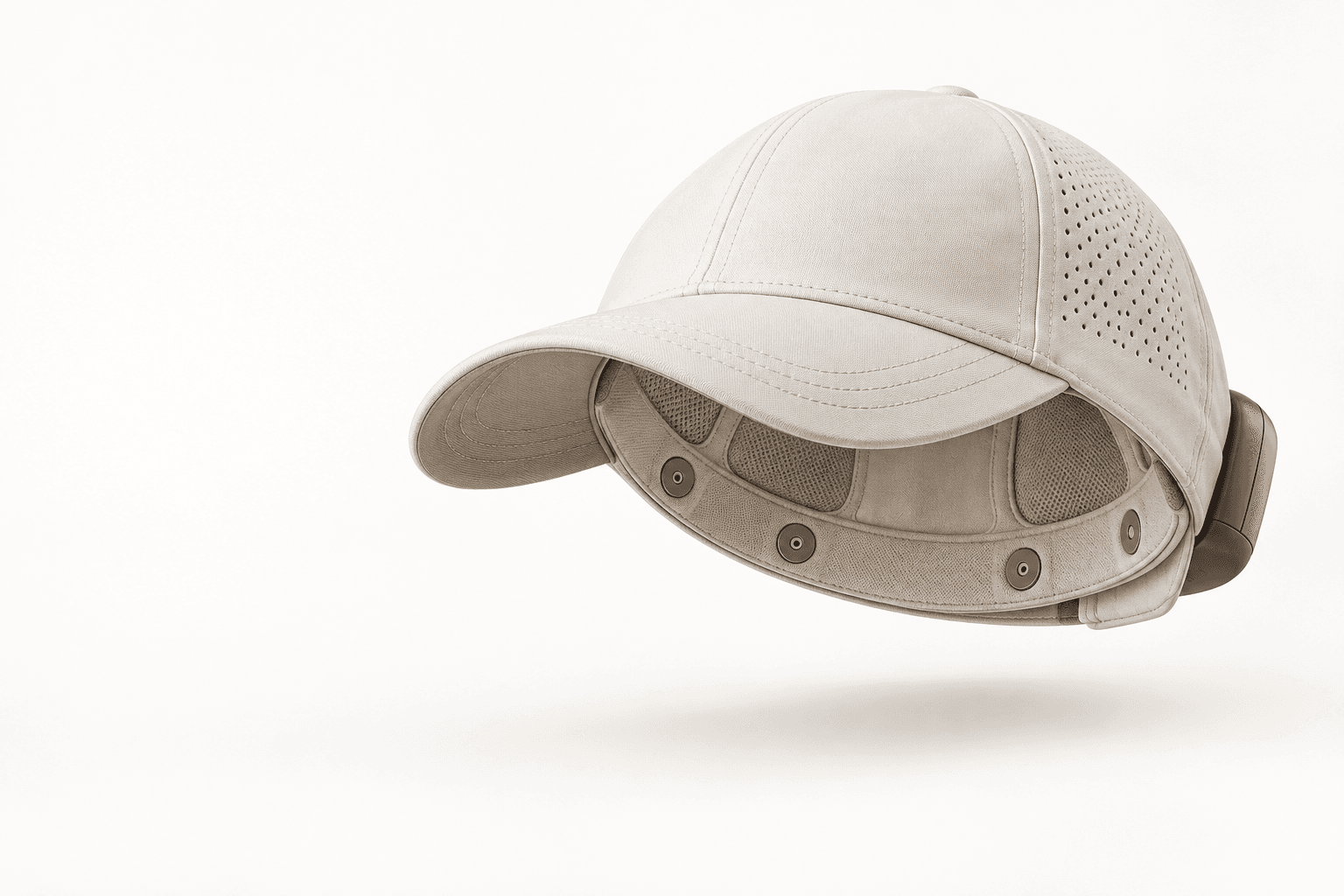
EEG measures small voltage changes at the scalp. Getting useful recordings depends on stable contacts, a repeatable fit, and reliable timing. We're designing the cap around those practical problems.
The shell, contact layer, and recorder have different jobs. Making the contact sections replaceable gives us a way to improve the parts that touch the scalp.
Replaceable electrode sections let us work on fit, scalp contact, and wear without rebuilding the entire instrument.
Battery-powered recording and a wireless link are part of the design, with event timing and clear records of any dropped samples.
The planned software checks contact quality before a task and exports raw EEG, channel labels, timestamps, and recording settings.
Our first focus is mobile neuroscience, XR, and human-factors research. The goal is practical: more usable recordings for the time a team spends fitting, recording, and maintaining its equipment.
Study activity while participants walk, interact, and move through an environment.
Explore cap fit and contact stability for studies with VR gear and other wearable equipment.
Build and test experimental interfaces with traceable channels, events, and timing.
The cap is in development. We'll test the contacts and recording electronics first, then compare a full cap with an established system on the same people and task.
Inside the research deckMeasure noise, fit, timing, and recognizable EEG.
Bring together contacts, recording, wireless, and raw export.
Compare setup time, usable data, comfort, and repeatability.
We're looking for research teams with a specific mobile EEG problem and an existing system to compare against. Help shape the cap around a task that matters.
Discuss a research pilot DEVELOPMENT PARTNERSHIPS / EARLY CONVERSATIONSThe cap is in development. We're working toward a functioning research instrument and paired validation before offering equipment for sale.
The current project is intended for research. We are not offering diagnosis, treatment, or clinical monitoring.
EEG records electrical activity at the scalp. Translating those signals into useful controls or communication requires a separately trained and tested interface. That is a longer-term research direction.
The private research deck covers the architecture, first customers, competitors, validation plan, and build sequence.